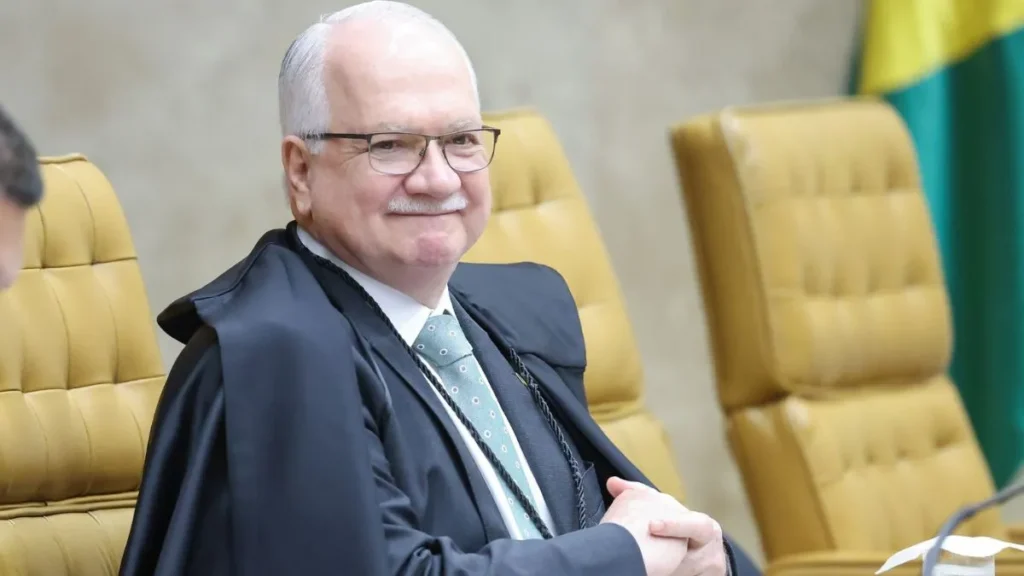
BRASÍLIA — Chief Justice Edson Fachin signaled on Tuesday that the Supreme Court is preparing to shutter its long-running and highly controversial “Fake News Inquiry,” an investigation that has redefined the boundaries of judicial power and free speech in Latin America’s largest democracy for seven years.
The probe, launched in 2019 without a request from public prosecutors, was initially framed as a defensive measure against a coordinated wave of digital threats and disinformation targeting the court’s justices. However, it quickly evolved into a powerful legal instrument that saw social media accounts blocked, homes raided, and prominent political figures detained, drawing sharp rebukes from civil liberties advocates and the political right.
A Quest for Institutional Normalcy
Speaking to reporters in the capital, Justice Fachin acknowledged growing concerns over the inquiry’s “perpetual nature.” While defending its necessity during a period of acute institutional instability, he suggested the court must now pivot toward a more conventional judicial framework.
“The inquiry served as a vital shield for our democracy during a time of unprecedented assault,” Justice Fachin said. “But a shield should not become a permanent fixture of the architecture. We are now evaluating the appropriate moment for its conclusion.”
The move is widely seen as an attempt to de-escalate tensions ahead of the October general elections, as the court seeks to shed its image as an active political protagonist.
A Legacy of Legal Friction
The inquiry’s legacy remains a flashpoint for debate. Supporters argue it was the only force capable of checking a sophisticated disinformation machine that threatened to topple the country’s high court. Detractors, however, view it as a dangerous precedent of “judge-led” prosecution that bypassed constitutional checks and balances.
The closure comes at a delicate moment. Just this week, the court issued a formal rebuttal to a U.S. Congressional report that criticized Brazil’s judicial overreach regarding digital censorship. In a strongly worded statement, the court defended its orders to remove content as lawful protections for the democratic order.
The New Battlefield: Big Tech and Rural Land
Even as one chapter closes, others are opening. The court is currently weighing two other cases with massive economic implications:
- Foreign Land Ownership: Justices are deliberating on a decades-old restriction that limits the ability of foreign-controlled companies to buy or lease rural land—a decision that could unlock billions in agribusiness investment or, conversely, tighten nationalistic controls.
- The Big Tech Deadlock: Following the collapse of the “Fake News Bill” (PL 2630) in Congress late last year, the Supreme Court is increasingly expected to set its own rules for platform liability through judicial precedents, much to the chagrin of Silicon Valley giants.
Political Chess in the Shadow of the Court
The timing of the inquiry’s potential end coincides with a massive cabinet reshuffle in President Luiz Inácio Lula da Silva’s government. With 18 ministers resigning this week to run for office—including former Finance Minister Fernando Haddad, who is eyeing the governorship of São Paulo—the political landscape is in a state of total flux.
As Brasília braces for a grueling campaign season, the Supreme Court appears eager to return to the shadows of the bench. But in a country where the line between law and politics is increasingly blurred, the “Great Realignment” of 2026 ensures that the court’s every move will remain under an unforgiving spotlight.
For more in-depth analysis of Brazil’s constitutional crises, visit our Americas section.